
10. 7. 2026
Positioning techniques
Positioning is an essential therapeutic and preventive process. Its purpose is to replace the natural movement of people who cannot move on their own, and so prevent irreversible damage to the body.
Positioning techniques using aids are essential for preventing pressure sores, reducing pain and supporting breathing in people who spend long periods lying down. The goal is to regularly alternate positions, usually every 2 hours, and relieve pressure on bony prominences. Micro-positioning is another option — even a small shift of a few centimetres or a change in joint angle every 30 minutes helps when a larger change of position isn't possible.
Let's first look at why we position patients, what consequences positioning prevents, and how we can bring relief — especially when the patient cannot tell us themselves.
- Pressure sores (decubitus ulcers): these can form when the body's weight on a surface closes off small blood vessels in the skin and subcutaneous tissue. If the pressure lasts too long, the tissue dies. Regular repositioning restores circulation at risk areas (heels, sacrum, shoulder blades).
- Muscle shortening: prolonged inactivity leads to joint stiffness and permanent shortening of muscles and tendons. Positioning in a so-called functional posture (natural joint angles) preserves mobility and makes future rehabilitation easier.
- Supporting breathing and circulation: an unchanging position causes mucus to build up and parts of the lungs to go unventilated, which can cause pneumonia. Positioning — for example raising the upper body — makes breathing and coughing easier.
Positioning helps prevent blood clots and the resulting risk of pulmonary embolism.
- Sensory stimulation: for unconscious or dementia patients, positioning gives the brain information about the body's boundaries and space. It's a key way to maintain contact with reality and activate the nervous system.
- Psychological and physical comfort, pain reduction: it is painful and frustrating for a patient to lie in an unchanging, sometimes uncomfortable position for a long time. Positioning reduces muscle tension, relieves chronic pain and improves sleep quality.
- Preventing swelling: propping the limbs slightly above heart level supports lymphatic and venous drainage, preventing painful swelling.
Now let's look at the basic positioning aids and how they're used:
Positioning wedges and blocks — used to fix the torso at an incline (e.g. a 30° position).
Rolls and half-rolls — long, soft aids that follow the shape of the body and stabilise the limbs.
Anti-decubitus cushions, pads and rings — spread pressure across risk areas (heels, elbows, sacrum).
Abduction wedges — keep the legs slightly apart (often used after hip surgery).
Key techniques and positions
1. Side-lying position (30° or 90°)
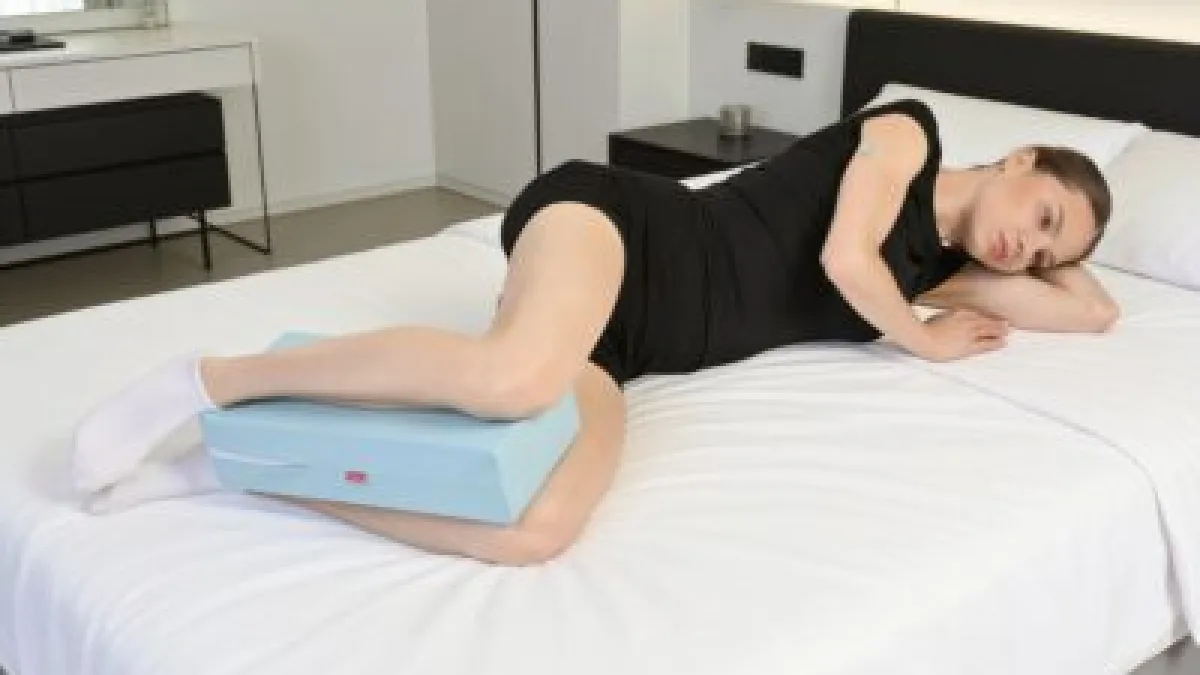
Technique — The patient lies on their side, with the lower leg slightly bent.
Using aids: place a pillow or small roll between the knees and ankles so the skin doesn't rub together. Place a positioning wedge behind the back for the patient to lean against, which stabilises the torso and relieves pressure on the sacrum.
2. Supine position (on the back)
Technique: the body is aligned, with the head slightly propped.
Using aids: place a small roll under the knees to prevent tension in the lower back. It's important that the heels are kept off the surface — prop the calves so the heels don't touch the mattress. The arms can be propped with pillows for comfort and to prevent swelling.
3. Semi-sitting (Fowler's position)
Technique: the upper body is raised at a 45–90° angle.
Using aids: besides a positioning bed, use supporting pillows under the arms so the weight of the shoulders doesn't pull the chest down (this makes breathing easier). There should be a slight bend under the knees so the patient doesn't slide down — a suitable positioning aid can be placed under the heels or knees.
4. Semi-lateral / semi-prone (Sims' position)
Technique: an intermediate stage between lying on the side and on the front.
Using aids: the lower arm is behind the body, the upper leg is bent significantly and supported by a large roll up to the chest. This position is very stable and comfortable for sleeping.
Remember not to drag the patient across the bed when repositioning them, to avoid chafing the skin. Also make sure the aids don't press anywhere on the patient or restrict their breathing.